Table of Contents
Does Your Job Damage Your Teeth? (And How To Avoid It)
Ever paused to think about what your 9-to-5 is doing to your teeth?
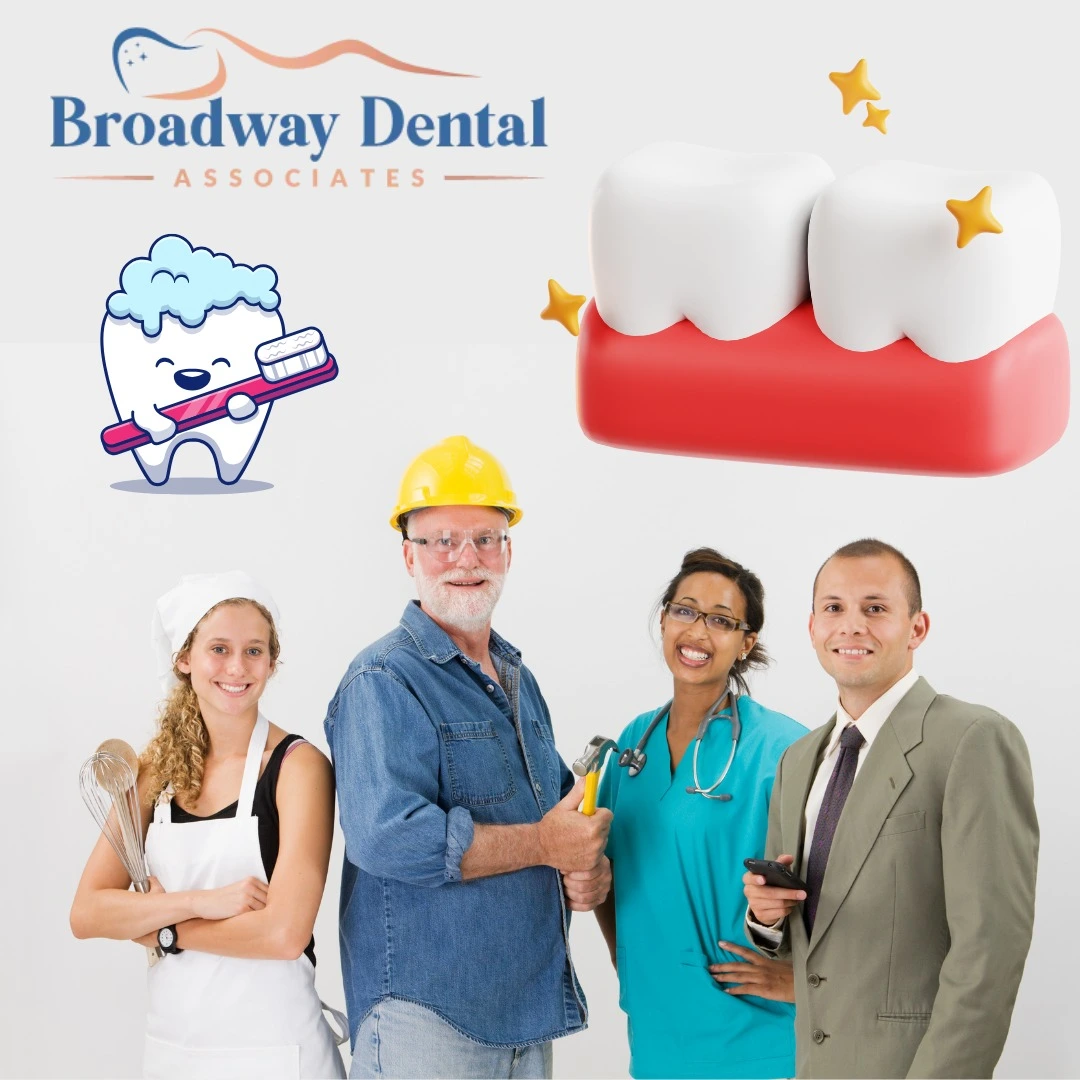
Most of us worry about brushing twice daily and flossing, but here’s something that might surprise you: your job could be quietly wrecking your smile.
Whether you’re glued to a desk, working the factory floor, or running between meetings with a coffee in hand, your workplace habits might be setting you up for common dental problems you never saw coming.
Let me tell you something we see all the time at our Falls Church dental clinic-people come in wondering why they’re suddenly dealing with tooth pain, worn enamel, or bleeding gums when they swear they’re doing everything right at home.
The culprit? Their workday routine.
The Stress Factor: Your Teeth Are Holding the Tension
Here’s the thing about stress: it doesn’t just live in your head. Around 83% of people dealing with chronic workplace stress show signs of poor oral health. That’s not a coincidence.
When you’re constantly worried about deadlines, dealing with difficult colleagues, or stressing over job security, your body responds. And your mouth? It takes the hit.
What happens when stress meets your smile:
- You might start grinding your teeth at night without even knowing it (we call this bruxism)
- Your immune system takes a nosedive, making you more vulnerable to gum infections
- Stress hormones mess with your body's ability to fight off bacteria
- You're more likely to skip basic care routines when you're exhausted
I’ve seen patients who’ve literally ground their teeth down to half their original height because of work stress. One guy came in with teeth so worn, they looked like they belonged to someone twenty years older. He worked in finance. The kicker? He had no idea he was grinding until we showed him the damage.
Jobs That Put Your Teeth on the Frontline
Some careers are tougher on teeth than others. Let’s be real about the high-risk professions:
Food Industry Workers
If you’re a baker, chef, or work in food production, you’re constantly taste-testing throughout your shift. Every little sample means sugar sitting on your teeth.
Research shows food industry workers have about 27% more cavities than the average person. That’s not because they’re bad at brushing-it’s occupational exposure.
Athletes and Physical Workers
Contact sports? You’re looking at a 33% chance of dental injury during your career.
But it’s not just about getting hit. Factory workers, construction crews, and warehouse staff face risks from falls, equipment mishaps, and physical accidents that can chip, crack, or knock out teeth entirely.
We’ve patched up more than a few smiles from workplace accidents. Sometimes it’s fixable with quick emergency dentistry, but tooth loss is a real possibility when trauma strikes.
The Desk Job Danger Zone
Think office work is safe? Think again. Desk jobs come with their own set of problems-constant coffee consumption, stress snacking, energy drinks to power through afternoon slumps, and that lovely habit of clenching your jaw during tense video calls.
The “deadline effect” is real. When project due dates loom, we see a spike in TMJ issues and teeth grinding reports. Your body literally holds tension in your jaw.
The Sneaky Workplace Habits Destroying Your Smile
Let’s talk about the everyday things you’re probably doing right now that are slowly damaging your teeth:
Using your teeth as tools
Opening packages with your teeth? Ripping tape? Holding things while your hands are full? Every time you do this, you’re risking chips, cracks, and worn enamel. Your teeth weren’t designed to be scissors.
The all-day snack attack
Grazing on pretzels, sipping coffee for hours, nibbling on candy from the break room-each time you eat, bacteria in your mouth throw a party and produce acid.
Without breaks between eating, your saliva can’t do its job of washing away that acid. Result? Cavities
Smoke breaks
Look, I’m not here to lecture you, but the numbers don’t lie. Smoking increases your risk of oral cancer, gum disease, and tooth loss. Plus, it stains your teeth and kills your ability to taste that expensive lunch you just ordered.
Chewing on pens and pencils
This nervous habit (we all do it) can crack teeth or wear down enamel faster than you’d think. Try swapping it for sugar-free gum or crunchy veggies instead.
The Beverage Problem Nobody Talks About
Corporate culture practically runs on coffee and energy drinks. But here’s what we see in patients who consume multiple cups daily: serious enamel erosion.
Coffee, tea, wine, and sodas are all acidic.
Wine sits at a pH of 3.0 to 3.8, way below the 5.5 threshold where your enamel starts breaking down. That fancy sommelier or wine tasting job? It’s basically bathing your teeth in acid all day.
And if you’re the type to crunch ice while drinking? Stop. That’s a direct path to cracked teeth.
Common Workplace Beverages: pH Levels & Dental Risk
| Beverage Type | pH Level | Dental Risk |
|---|---|---|
| Water | 7.0 | None |
| Coffee | 4.85-5.10 | Moderate acid erosion |
| Wine | 3.0-3.8 | High acid erosion |
| Soda | 2.5-3.5 | Very high acid erosion |
| Energy Drinks | 2.5-3.3 | Very high acid erosion + sugar damage |
Note: Enamel erosion begins at pH 5.5 or below. The lower the pH, the more acidic and damaging to teeth.
Your Immune System Is Crying for Help
When you’re pulling long hours and running on fumes, your immune system weakens. About 50% of stressed workers develop stress ulcers in their mouths-those painful little sores that make eating miserable.
Low immunity means your body can’t fight off gum infections effectively. We see more swollen gums, bleeding during brushing, and chronic periodontal disease in patients who are burning the candle at both ends.
Even wound healing after dental procedures takes longer when your immune system is compromised.
The Sugar-Stress Connection
Rough day at work? Nothing sounds better than a candy bar or chocolate from the vending machine, right? That’s your brain craving those feel-good endorphins and serotonin that sugar temporarily provides.
The problem? Sugar is the number one cause of tooth decay. Combine frequent sugar consumption with a sedentary job, poor oral hygiene from exhaustion, and lack of awareness about the damage-and you’ve got a recipe for cavities.
Here’s an interesting stat: tooth decay is one of the most common reasons employees miss work. The pain is so intense people literally cannot function. We get it-tooth pain is brutal.
Special Mention: Industrial and Agricultural Work
If you work in manufacturing, farming, or industrial settings, you face unique challenges.
Operating heavy machinery like tractors, using jackhammers or drills—the constant vibration can cause your jaw to bounce repeatedly, leading to bruxism and TMJ disorders over time.
Industrial dust containing abrasive particles can also wear down enamel after years of exposure. And let’s not forget the physical injury risks from accidents.
How to Protect Your Smile at Work
Okay, enough doom and gloom. Let’s talk solutions.
Here’s what we recommend to our patients in Falls Church and throughout Virginia:
Hydrate constantly
Water is your mouth’s best friend. It rinses away food particles, neutralizes acids, and keeps your saliva flowing. Drink water throughout your shift, especially after coffee or snacks.
Create a workplace dental kit
Seriously, keep a toothbrush, toothpaste, and floss at your desk or in your locker. A quick brush after lunch makes a huge difference.
Wait before brushing
If you’ve just had something acidic (soda, wine, citrus), wait 30 minutes before brushing. Otherwise, you’re literally brushing acid into your enamel. Rinse with water instead.
Use protection
Athletes and physical workers need proper mouthguards. Industrial workers should wear masks when appropriate. Don’t skip safety equipment.
Manage stress proactively
Exercise, meditation, therapy-whatever works for you. Your teeth will thank you. If you’re grinding at night, ask us about a night guard.
Schedule regular checkups
We can catch problems early and tailor our care to your specific occupational risks. Tell us about your job so we know what to watch for. Book an appointment with us to get started.
Consider your benefits
Many people don’t take full advantage of their dental insurance. We offer flexible payment plans if cost is a concern.
When to Sound the Alarm
Don’t ignore warning signs. If you’re experiencing increased tooth sensitivity, visible wear on your teeth, jaw pain, frequent headaches, or bleeding gums—come see us.
These symptoms suggest your job might be taking a toll on your dental health.
Prevention is always cheaper and less painful than dealing with advanced problems. A small cavity caught early is a quick fix.
That same cavity ignored for a year? You might be looking at a root canal or worse.
Your Smile Shouldn't Be a Career Casualty
Here’s the bottom line: your job is important, but not more important than your health. As we age, maintaining oral health becomes even more critical to overall wellbeing.
At Broadway Dental Associates, we see firsthand how workplace factors affect our patients’ smiles.
The good news? With awareness and a few smart habits, you can protect your teeth while still crushing it in your career.
Your career path shouldn’t leave a trail of dental destruction. Be mindful of your habits, stay hydrated, manage stress, and don’t skip those dental visits.
We’re here in Falls Church to help you maintain a healthy smile-no matter what your job throws at you.
Ready to make sure your job isn’t damaging your teeth? Contact us. We’ll do a thorough assessment and create a plan tailored to your lifestyle and occupational risks.
Because everyone deserves a smile they’re proud of-even after a tough day at the office.