Table of Contents
Hispanic Heritage Month & Dental Health for Falls Church, VA
Every year from September 15 to October 15, our country celebrates Hispanic Heritage Month.
It’s a time to honor the rich histories, cultures, and contributions of Americans with roots in Spain, Mexico, the Caribbean, and Central and South America.
The start date isn’t random, either, September 15 marks the independence anniversaries of Costa Rica, El Salvador, Guatemala, Honduras, and Nicaragua, with Mexico’s independence following on September 16. Pretty cool, right?
Now, I know what you might be thinking. What does a dental blog have to do with Hispanic Heritage Month? Well…. A lot more than you’d expect.
Here at Broadway Dental Associates, I’ve seen firsthand how language, culture, and access to care shape the smiles of our neighbors right here in Falls Church.
And this month gives us a perfect reason to talk about it, openly, honestly, and without the dental jargon.
So grab a cup of café con leche, get comfortable, and let’s chat about why this month matters for your oral health, and what we’re doing about it right here in our Falls Church dental clinic.
The Smile Gap Nobody Talks About
Let’s start with the elephant in the room. There’s a real gap in dental health between Hispanic communities and other groups in the U.S. And it’s not small.
According to the CDC’s National Health and Nutrition Examination Survey, untreated tooth decay was significantly higher for Hispanic adults (36%) compared to non-Hispanic white adults (22%) among those aged 20 to 64.
That’s not just a number, that’s real people living with pain, infections, and embarrassment that could have been prevented.
The ADA Health Policy Institute found something similar. In 2017-18, only 27.8% of Hispanic adults and 31.8% of Hispanic seniors visited a dentist, compared to 47.4% of white adults and 54.8% of white seniors.
And among all groups studied, Spanish-speaking Hispanics reported the poorest oral health, the most infrequent dental visits, and the fewest remaining teeth.
Let that sink in for a second. The very people who might need dental care the most are the ones least likely to walk through our doors.
Why This Hits Close to Home in Falls Church
Falls Church is a wonderfully diverse place.
According to the U.S. Census Bureau, about 10.8% of our city’s population identifies as Hispanic or Latino.
That’s over 1,500 of our neighbors, friends, and family members. And we’ve also got a significant foreign-born population, about 16.6% of residents.
These aren’t just statistics to me. They’re the families I see in my chair. They’re the parents who bring their kids in for checkups but haven’t had a cleaning themselves in years.
They’re the grandparents who’ve been dealing with a toothache for months because they didn’t know where to go.
And here’s the thing, a lot of the barriers they face aren’t about not caring. They’re about language, cost, and comfort.
When "Say Ahh" Doesn't Translate
Let me paint you a picture. You’re sitting in a dental chair. Someone is telling you that you need a root canal.
They’re using words like “endodontic therapy” and “pulpotomy.” And you’re nodding along, hoping you understood correctly, but you’re not entirely sure.
For the nearly 42 million Spanish speakers in the United States, this scenario is way too familiar. And when patients can’t effectively communicate their symptoms, concerns, or medical history, the quality of care they receive can suffer.
Research backs this up. In households where Spanish was the primary language, the likelihood of tooth decay was 70% compared to 47% in primarily English-speaking households.
Children of Hispanic parents who don’t speak English at home face linguistic challenges during dental visits and end up with higher rates of cavities, fewer preventive visits, and fewer dental sealants compared to the general U.S. population.
That’s heartbreaking. And it’s preventable.
A Quick Look at the Numbers
🦷 Dental Health Disparities
Comparison of key dental health indicators between Hispanic and Non-Hispanic White adults
| Dental Health Indicator | Hispanic Adults | Non-Hispanic White Adults |
|---|---|---|
| Untreated tooth decay (ages 20–64) | 36% | 22% |
| Dental visit in past year (adults) | 27.8% | 47.4% |
| Dental visit in past year (seniors) | 31.8% | 54.8% |
| Periodontitis prevalence (Mexican American adults) | 60% | 37% |
Higher risk / lower access
Lower risk / higher access
Sources: CDC National Health and Nutrition Examination Survey; ADA Health Policy Institute
The Dentist Shortage That Makes Things Worse
Here’s another piece of the puzzle. Despite being the largest growing non-majority ethnic group in the U.S., Hispanic dentists make up only 5.6% of active dentists.
That means when a Spanish-speaking patient walks into a dental office, there’s a pretty good chance nobody there speaks their language.
And when you can’t communicate with your dentist, you’re less likely to ask questions, less likely to understand your treatment plan, and less likely to come back.
The Hispanic Dental Association (HDA) has been working on this for years.
Their annual Nuestra Sonrisa Hispana, or “My Hispanic Smile”, campaign encourages dentists to provide free dental days, health fairs, and Spanish-language oral health materials to underserved communities.
They’ve also launched the BOLD program to mentor pre-dental students and inspire more Hispanic students to consider dentistry as a career.
But there’s still a long way to go.
What We're Doing About It at Broadway Dental Associates
Look, I’m not here to just throw statistics at you. I’m here to tell you what we’re actually doing.
First, we’ve made a commitment to creating a welcoming environment for every patient who walks through our doors, no matter what language they speak.
That means offering clear communication, taking the time to explain procedures thoroughly, and making sure you actually understand what’s happening with your teeth.
Second, we believe cost shouldn’t be a barrier to a healthy smile. That’s why we offer flexible payment plans designed to fit real budgets. Nobody should have to choose between fixing a tooth and paying rent.
And third, we’re big believers in cosmetic dentistry that goes beyond just looking good. A healthy smile affects everything, how you eat, how you speak, how you feel about yourself. Whether you’re dealing with stained teeth, chipped enamel, or just want a fresh start, we’re here to help.
The Real Barriers Are Bigger Than Teeth
Here’s something important I want you to understand. The oral health disparities we see in Hispanic communities aren’t just about individual choices. They’re rooted in bigger issues.
For starters, about 40% of Hispanic adults live in states where adult dental care isn’t covered by Medicaid. That means millions of people have to pay out of pocket for even basic cleanings, and many simply can’t.
Language is another huge factor. When patients can’t express their concerns or understand treatment options, both care quality and patient satisfaction suffer.
Trust is fundamental, and for some Hispanic patients, particularly those who have faced discrimination or have immigration concerns, visiting healthcare providers can be intimidating.
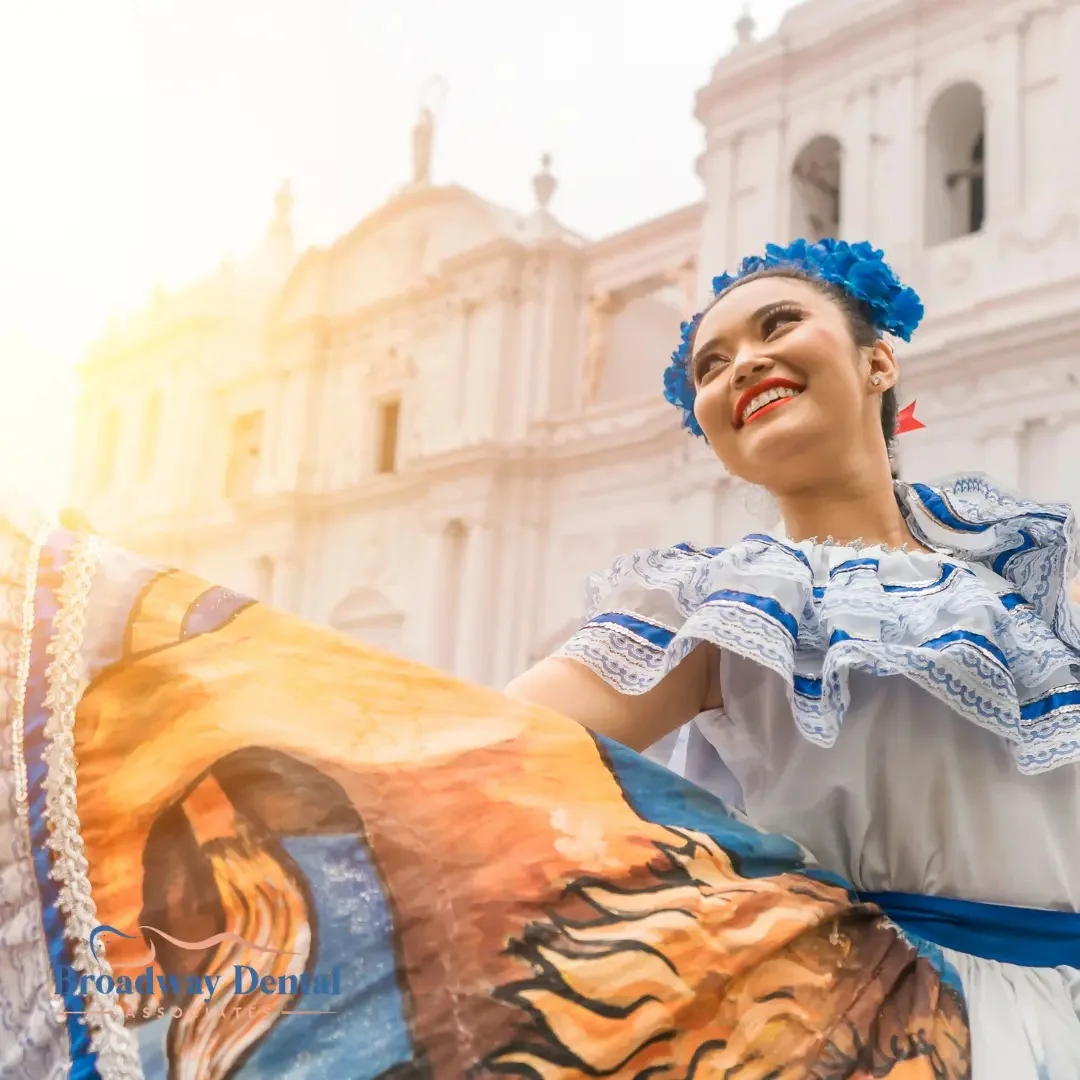
Celebrating Culture While Caring for Smiles
One of the things I love most about Hispanic culture is how family-centered it is. Decisions aren’t made in isolation, they’re made together. And that’s actually a huge strength when it comes to dental health.
Dental practices that welcome entire families and accommodate multiple generations during appointments often see better compliance with treatment recommendations.
When abuela (grandmother) approves of the dental routine, younger family members are more likely to follow through. It’s that simple.
And let’s talk about food for a second, because Hispanic cuisine is amazing.
Dishes like ceviche and citrus-marinated meats contain acid that can weaken tooth enamel over time. Sweet treats like churros and flan have sugars that contribute to tooth decay.
But other staples like beans, avocados, and vegetable-forward dishes are packed with nutrients that are great for strong teeth and healthy gums.
The answer isn’t to avoid cultural foods. It’s to enjoy them mindfully. Rinse with water after acidic foods. Brush regularly. Moderate the sweets. You get the idea.
The Fluoride Factor
Here’s a simple tip that can make a big difference: drink fluoridated tap water. It’s a better alternative to bottled water and helps prevent cavities in both children and adults.
Want to know if your community water system has fluoride?
The CDC has a handy resource called My Water’s Fluoride where you can check. It takes like two seconds, and it’s actually kind of interesting.
Moving Forward Together
So what’s the takeaway here? I think it’s this: Hispanic Heritage Month isn’t just about celebrating culture. It’s about recognizing that health equity, including dental health equity, is still a work in progress.
The disparities are real. The barriers are real. But so are the solutions.
At Broadway Dental Associates, we’re committed to being part of the solution.
Whether you’re a Spanish-speaking family looking for a dentist who understands your needs, someone who’s been putting off a visit because of cost, or just someone who wants a healthier smile, we’re here for you.
You can book your appointment online whenever it’s convenient for you. No pressure, no judgment. Just honest care from people who genuinely want to help.
One Last Thing
If you’ve been putting off that dental visit, whether it’s been six months or six years, I want you to know something. You’re not alone. And it’s never too late to start taking care of your smile.
This Hispanic Heritage Month, let’s celebrate the beautiful diversity of our Falls Church community by making sure everyone has access to the care they deserve. ¡Sonrisas saludables para todos! Healthy smiles for everyone.