Table of Contents
Why Your Mouth Is So Sensitive to Small Changes - VA Guide
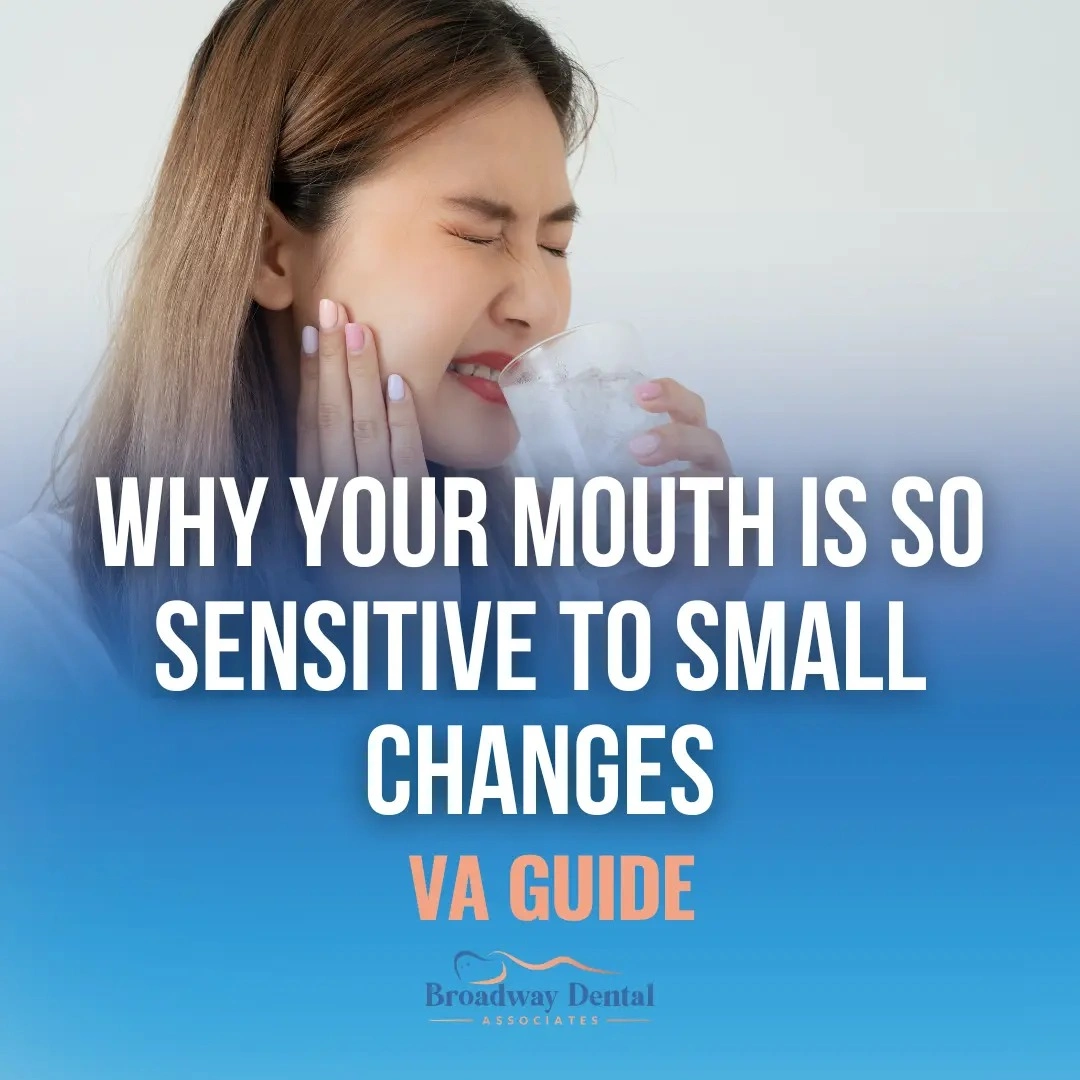
You know that feeling. You’re enjoying a peaceful morning, maybe sipping your coffee or stepping outside into that crisp Falls Church air, and then, zing.
A sudden, sharp twinge in your tooth that stops you in your tracks. It’s fleeting, but for that split second, all you can think about is that unpleasant sensation.
I hear this from patients at Broadway Dental Associates all the time. “Dr. Yousaf,” they’ll say, “my teeth were fine yesterday! Why are they suddenly so sensitive today?”
It’s a great question. And the answer often comes down to one fascinating fact: your mouth is incredibly, almost surprisingly, sensitive to tiny changes.Now, I know what you might be thinking. A whole month for gums? Really?
You might not notice a microscopic shift in your enamel or a hairline crack from grinding your teeth. But your mouth? Oh, it notices everything.
That’s because your teeth are packed with nerve endings designed to detect the smallest alterations in pressure, temperature, and even chemistry.
Today, we’re going to unpack exactly why your mouth reacts so strongly to small changes, and more importantly, what you can do about it.
Think of this as your friendly guide to understanding those unexpected zings and keeping your smile comfortable.
Why So Sensitive? The Science Behind the Zing
So, why does a sip of cold water or a breath of winter air send a shockwave through your tooth? It all comes down to a layer of your tooth called dentin and the microscopic highways within it.
The Highway to Your Nerves
Imagine your tooth has three main layers. The hard, outer shell is enamel, the protective armor. Inside that is dentin, a softer, yellowish layer. At the very center is the pulp, which houses the nerves and blood vessels.
Dentin is made up of thousands of microscopic tubules, think of them as tiny, fluid-filled straws that run from the outer edge of the dentin straight to the nerve center in the pulp.
As long as your enamel is intact, these tubules are sealed off, and you don’t feel much.
But here’s where things get interesting. When that protective enamel wears down or when your gums recede, those dentinal tubules become exposed.
Suddenly, anything that causes the fluid inside these tubules to move, a change in temperature, a blast of air, a sweet or acidic food, creates a stimulus that travels straight to the nerve.
As Cleveland Clinic explains, “dentin has tiny tubes that lead to the center of your tooth, where the nerve lives. These tubes let temperature changes and sugar reach the nerve and cause pain”.
The result? Your brain registers that movement as a sharp, brief, and often intense pain.
The "Just Right" Balance
Your teeth are also incredibly sensitive to pressure and bite alignment.
Even a tiny change, like a new filling that’s a fraction of a millimeter too high or the beginnings of a habit of clenching your jaw, can throw off the delicate balance.
Your jaw muscles and the ligaments surrounding your teeth are tuned to a very specific bite pattern. When that pattern is disrupted, even slightly, the ligaments and nerves become irritated. It’s like a door that’s slightly off its hinges; even a small misalignment can cause friction and discomfort every time you use it.
The Usual Suspects: Common Triggers
You now know the “how” of tooth sensitivity, but let’s talk about the “why.” What are the everyday culprits that cause these small changes to turn into big zings?
Enamel Erosion: The Silent Thinner
Enamel is the hardest substance in the human body, but it’s not indestructible. Over time, it can be worn down by:
- Acidic Foods and Drinks: Citrus fruits, tomatoes, sodas, and even wine can erode enamel, especially with frequent exposure. Johns Hopkins Medicine notes that “frequent consumption of acidic foods can reduce tooth enamel and lead to dentin exposure”.
- Aggressive Brushing: Scrubbing too hard or using a hard-bristled toothbrush can literally brush away your enamel.
- Teeth Grinding (Bruxism): Clenching and grinding, often at night, creates friction that wears down enamel and can cause micro-cracks.
Gum Recession: Exposing the Roots
Your tooth roots aren’t covered by hard enamel; they’re protected by a thinner, softer layer called cementum.
When gums recede, due to aggressive brushing, gum disease, or simply aging, this vulnerable root surface becomes exposed.
This is a recipe for heightened sensitivity because the tubules in the root dentin are much closer to the surface.
Bite Changes and New Dental Work
Have you ever had a new filling or a crown and suddenly felt like your bite was off? That’s a classic example of a small change causing big sensitivity.
Even a “high spot” on a new filling can concentrate pressure on one tooth, irritating the ligament and making it sensitive.
This usually resolves quickly but is a perfect illustration of how finely tuned your bite is.
What You Can Do Right Now
If you’re dealing with annoying sensitivity, you don’t have to just live with it. Here are some practical, at-home steps you can take to calm things down.
1. Switch Your Toothpaste
One of the most effective tools in your arsenal is a desensitizing toothpaste. These pastes contain ingredients like potassium nitrate or stannous fluoride that work in two ways.
- Potassium nitrate helps calm the nerves inside your teeth by interfering with the pain signals.
- Stannous fluoride creates a protective barrier over the exposed dentin, effectively plugging those microscopic tubules.
As Dr. Sung from UCLA’s School of Dentistry points out, these ingredients “help clog the dentinal tubules and prevent the painful stimulus from reaching the nerve,” but you’ll need to use them consistently for a few weeks to see the full benefit.
2. Polish Your Brushing Technique
It’s not just what you use, but how you use it.
- Choose a soft-bristled brush: Hard bristles can wear down enamel and cause gum recession.
- Use gentle pressure: You don't need to scrub. Use light, circular motions. If your toothbrush bristles look frayed after a few weeks, you're pressing too hard.
- Wait 30 minutes after acidic foods: Brushing immediately after eating or drinking something acidic can actually scrub the acid deeper into your enamel. Rinse with water first and wait.
3. Watch Your Diet
- Limit acidic foods and drinks: This doesn’t mean you can never have a lemon or a soda again, but be mindful. Use a straw for acidic drinks to minimize contact with your teeth.
- Rinse with water: After consuming anything acidic or sugary, rinse your mouth with plain water to help neutralize the acids and wash away sugars.

When to See Us at Broadway Dental Associates
Home care is great, but it’s not a substitute for professional advice. Sometimes, sensitivity is a sign of a more serious issue that needs a dentist’s touch.
Don't Ignore These Red Flags
- Pain that lasts: If your sensitivity lingers for more than a minute after the trigger is gone, it’s time to see us.
- Pain to heat: Sensitivity to hot foods and drinks can be a sign of nerve problems.
- Constant pain: If you have spontaneous pain that comes on without any trigger, that’s a clear signal something is wrong.
- Pain when biting: This could indicate a cracked tooth or a problem with a filling.
- Swelling or a bad taste: These are signs of a potential infection and require immediate attention.
Preventing Future Zings
The best way to deal with sensitivity is to prevent it from happening in the first place. Here are some habits I recommend to my patients in Virginia.
- Keep your regular check-ups: We can spot the early signs of enamel wear or gum recession long before they become painful.
- Keep up with gentle brushing: Use a soft brush and a light touch.
- Be smart about acidic foods: Enjoy them, but be mindful and rinse with water afterward.
- Talk to us about whitening: If you're considering teeth whitening, we can recommend a sensitivity-safe protocol.
- Use a mouthguard: If you grind your teeth at night or play contact sports, a mouthguard is essential.
You Don't Have to Live with Sensitive Teeth
That sudden zing can be a real pain, both literally and figuratively. But it’s often a sign that your body is telling you something important. Your mouth is an incredibly sensitive system, finely tuned to detect the smallest changes.
Whether it’s a tiny new crack from grinding or a bit of gum recession, the sensitivity is a clue. And at Broadway Dental Associates, we’re here to help you decode that clue and find the right solution.
If you’re tired of wincing every time you enjoy your favorite foods or step outside into the Virginia air, we can help.
Ready to find relief?
Don’t let sensitive teeth control your life. Schedule an appointment with me, Dr. Yousaf, at Broadway Dental Associates in Falls Church today.
Let’s get to the bottom of your sensitivity and get you back to smiling, eating, and drinking comfortably.
And remember, unexpected dental issues can happen. If you’re experiencing severe pain or a dental emergency, we offer emergency dentistry in Falls Church, VA to get you the care you need right away.
We look forward to seeing you and helping you achieve a healthy, comfortable smile!