How to Protect Your Teeth from Chlorine in Swimming Pools?
Summer in Falls Church means one thing, it’s time to hit the pools!
Whether you’re doing laps at the local community center or lounging in your backyard oasis, swimming offers fantastic exercise and relief from Virginia’s humid summers.
But here’s something that might surprise you: that crystal-clear pool water could be quietly wreaking havoc on your smile.
At Broadway Dental Associates, we’ve seen firsthand how chlorinated water can damage teeth, especially among our patients who are avid swimmers.
The good news? With the right knowledge and protective strategies, you can keep enjoying your favorite aquatic activities while safeguarding your dental health.
Is Pool Chlorine Bad for Your Teeth?
Let’s address the elephant in the room, yes, pool chlorine can absolutely harm your teeth. But before you swear off swimming forever, understand that the damage isn’t inevitable. It’s all about exposure levels and taking proper precautions.
Chlorine serves a vital purpose in pools by killing harmful bacteria and pathogens that could make you sick.
However, when chlorine mixes with water, it creates an acidic environment that can spell trouble for your tooth enamel. The critical pH threshold for tooth damage is 5.5, once water drops below this level, your enamel begins to dissolve.
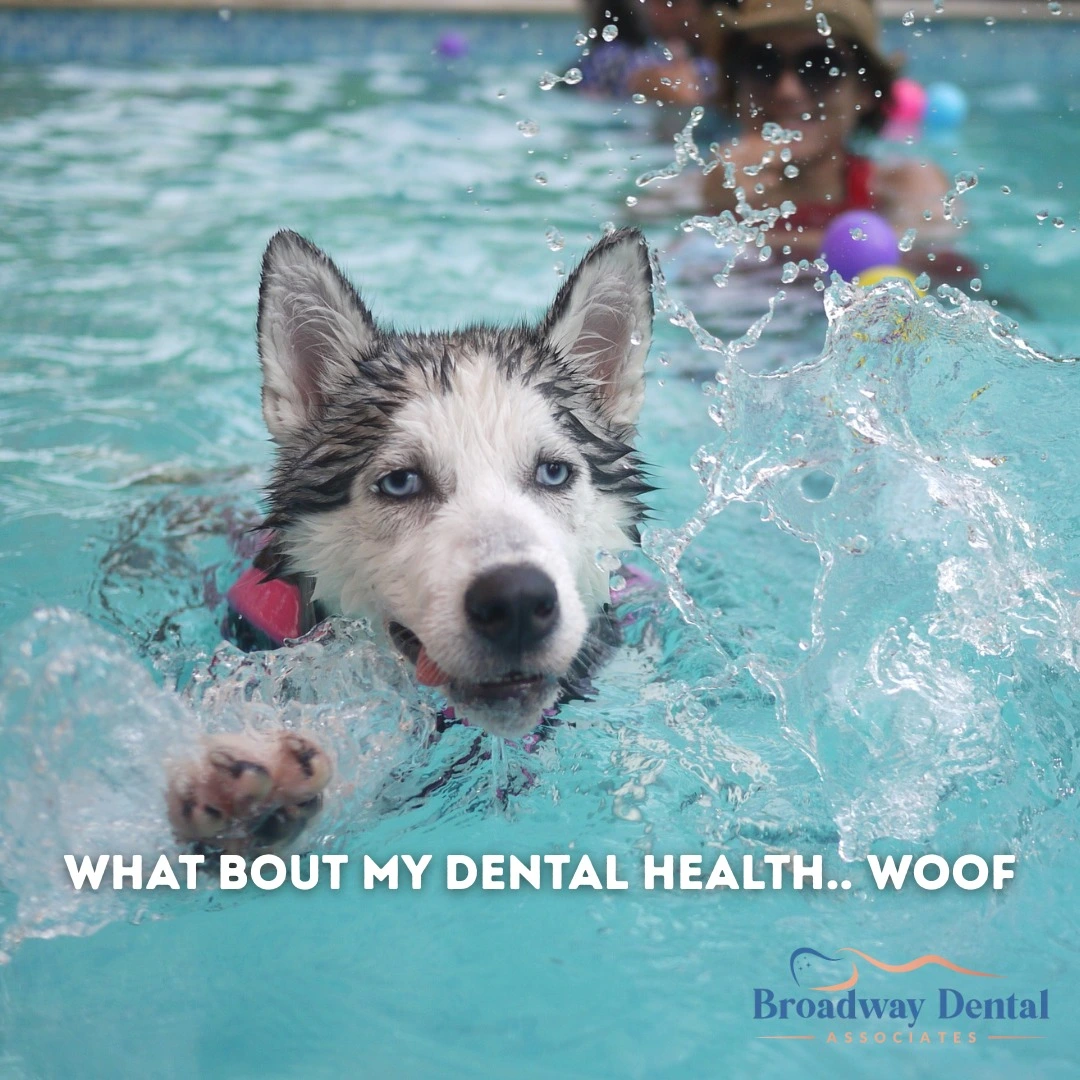
The Science Behind Chlorine Damage in Falls Church Pools
As your trusted dental team in Falls Church, we want you to understand exactly what happens when chlorinated water meets your teeth. When pool chemicals aren’t balanced correctly, something we see quite often with private pools, the water becomes more acidic than your mouth’s natural pH.
Your saliva normally helps neutralize acids and protect your teeth. But when you’re swimming, especially if you’re keeping your mouth open or accidentally swallowing pool water, that protective barrier gets overwhelmed.
The acidic water starts breaking down the minerals in your tooth enamel, leading to enamel erosion or chlorine-related staining.
How to Protect Teeth from Chlorine Water: Our Top Strategies
Before You Jump In
Smart protection starts before you even enter the pool. Here’s what we recommend to our Falls Church patients:
Test the Water Quality
- Use pH test strips to verify the pool maintains levels between 7.2-7.8
- Look for signs of equipment corrosion, which indicates overly acidic conditions
- If you're at a public facility, don't hesitate to ask staff about their maintenance schedule

Prep Your Mouth
- Professional fluoride treatments based on individual risk assessment.
- Stay well-hydrated to maintain healthy saliva production
During Your Swim
Should you close your mouth while swimming because chlorine can wear down enamel? Absolutely! This is one of the simplest yet most effective protective measures you can take.
Keep That Mouth Shut
- Maintain a closed-mouth technique during laps and water activities
- Avoid games that involve holding pool water in your mouth
- Never swallow pool water intentionally
- Take regular breaks to allow your saliva to neutralize any acid exposure

For serious swimmers or those spending extensive time in pools, we often recommend custom-fitted mouthguards.
How to Prevent Chlorine Damage While Swimming: Post-Pool Care
Your protection routine doesn’t end when you towel off. What you do immediately after swimming can make or break your dental health.
Immediate Actions
- Rinse vigorously with fresh water right after leaving the pool
- Wait 30-60 minutes before brushing with fluoride toothpaste
- Use a fluoride mouth rinse to help restore your mouth's natural pH balance
- Drink plenty of fresh water to combat dry mouth effects
Post-Swimming Dental Care Timeline
| Time After Swimming | Action | Why It Matters |
|---|---|---|
| Immediately | Fresh water rinse | Removes chlorine residue |
| Within 30–60 minutes | Brush with fluoride toothpaste | Prevents acid damage |
| Within 2 hours | Fluoride mouth rinse | Restores pH balance |
| Throughout day | Stay hydrated | Maintains saliva production |
Advanced Protection for Virginia Swimmers
At Broadway Dental Associates, we educate our patients who are regular swimmers. If you’re spending significant time in Falls Church area pools, these advanced strategies can provide extra protection:
Professional Fluoride Treatments
Research shows that Periodic professional fluoride treatments (as recommended by your dentist) create a calcium fluoride-rich layer that provides extended protection against acid erosion.
Custom Protective Solutions
For competitive swimmers or those with existing sensitivity, personalized treatment plans can be created that might include:
- Custom mouthguards as a physical barrier
- Specialized desensitizing treatments
- Regular monitoring during the swimming season
Warning Signs: When to Visit Broadway Dental Associates
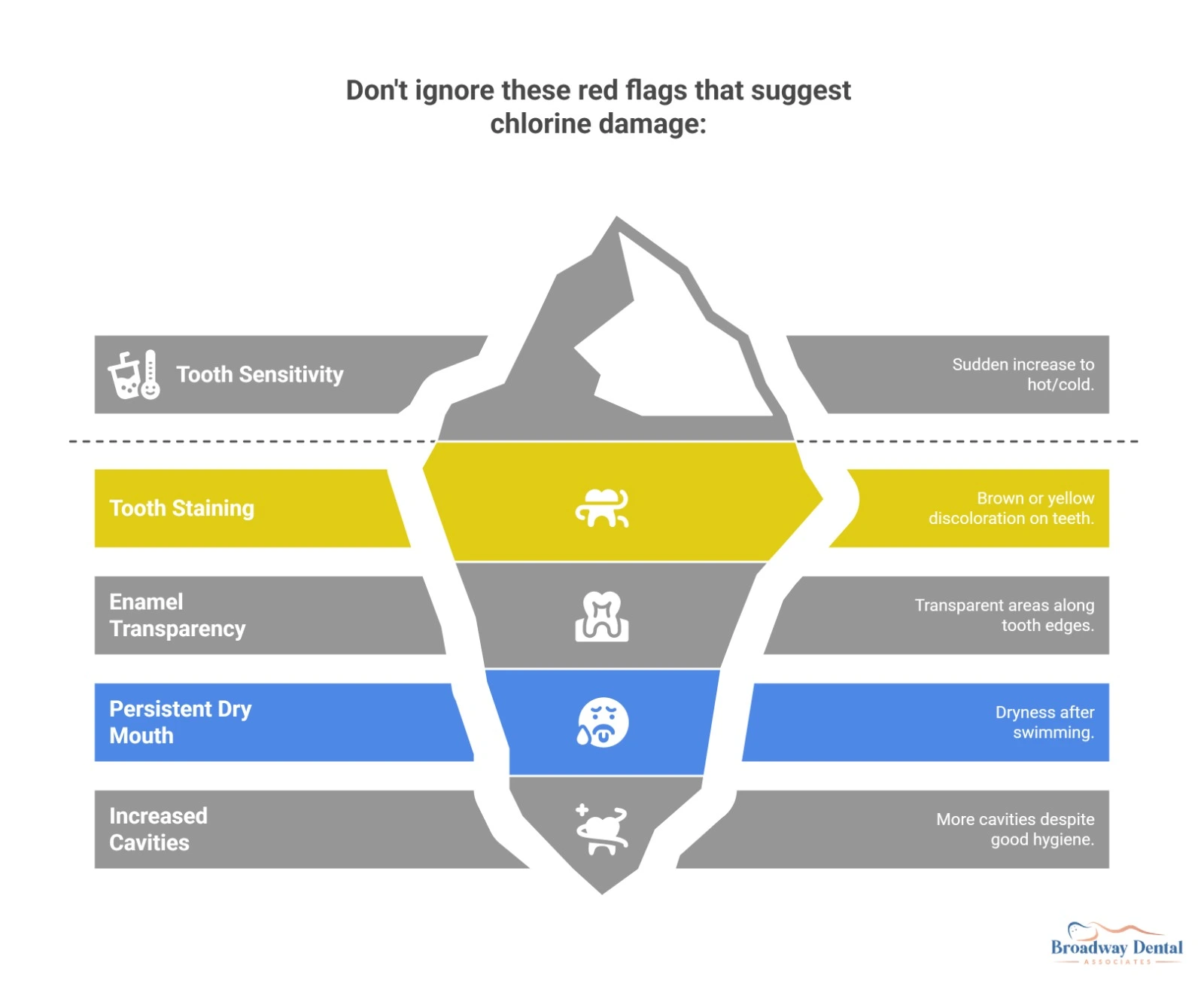
Don’t ignore these red flags that suggest chlorine damage:
- Sudden increase in tooth sensitivity to hot or cold
- Visible brown or yellow staining, especially on front teeth
- Transparent areas along tooth edges
- Persistent dry mouth after swimming
- More cavities than usual despite good oral hygiene
If you notice any of these symptoms, schedule an appointment with our Falls Church team immediately. Early intervention can prevent minor issues from becoming major problems.
Special Considerations for Families in Falls Church
Parents, Listen Up! Children are at higher risk for chlorine damage because they’re more likely to swallow pool water and less consistent with protective routines.
If your kids are regular swimmers, consider:
- Teaching proper closed-mouth swimming techniques early
- Making post-swim dental care a fun family routine
- Regular check-ups during swimming season
- Protection if they wear braces or Invisalign

The Broadway Dental Associates Approach to Swimmer's Oral Health
We believe prevention is always better than treatment. We emphasize the importance of year-round dental care, especially for active individuals who face unique challenges like chlorine exposure.
Our approach includes:
- Personalized risk assessment based on your swimming habits
- Tailored prevention plans for competitive athletes
- Family education programs
- Flexible payment plans to make protective treatments accessible
Your Action Plan for Chlorine-Safe Swimming
Here’s your takeaway strategy for enjoying Falls Church pools without sacrificing your smile:
- 1. Test before you swim, know your pool's pH levels
- 2. Prep your mouth with fluoride protection
- 3. Keep it closed, and maintain proper swimming technique
- 4. Rinse immediately after every swim session
- 5. Follow up with fluoride brushing and mouth rinse
- 6. Monitor changes in sensitivity or appearance
- 7. Schedule regular check-ups during swimming season

Ready to Protect Your Smile This Swimming Season?
Swimming should enhance your health, not compromise it.
With proper precautions and professional guidance, you can enjoy all that Falls Church’s aquatic scene has to offer while keeping your teeth healthy and beautiful.
Don’t let chlorine concerns keep you out of the water, let us help you swim smart and smile bright all season long.
Contact our Falls Church office today to discuss your swimmer’s dental health plan. Your teeth (and your summer fun) will thank you!
Ready to take the plunge into better dental health? Schedule your consultation with Broadway Dental Associates and learn how to protect your smile while enjoying every splash.